
EMDR Therapy: Healing Beyond Words
A body-centered path to processing trauma and systemic stress.
Trauma isn’t just a memory of what happened; it’s a physical and emotional weight that stays in your body. You might feel “stuck” in the past, constantly on edge, or exhausted by the weight of systemic stressors. If traditional talk therapy has felt like you’re just “circling the drain” without finding relief, EMDR offers a different way forward.
How It Works: The 8 Phases of EMDR
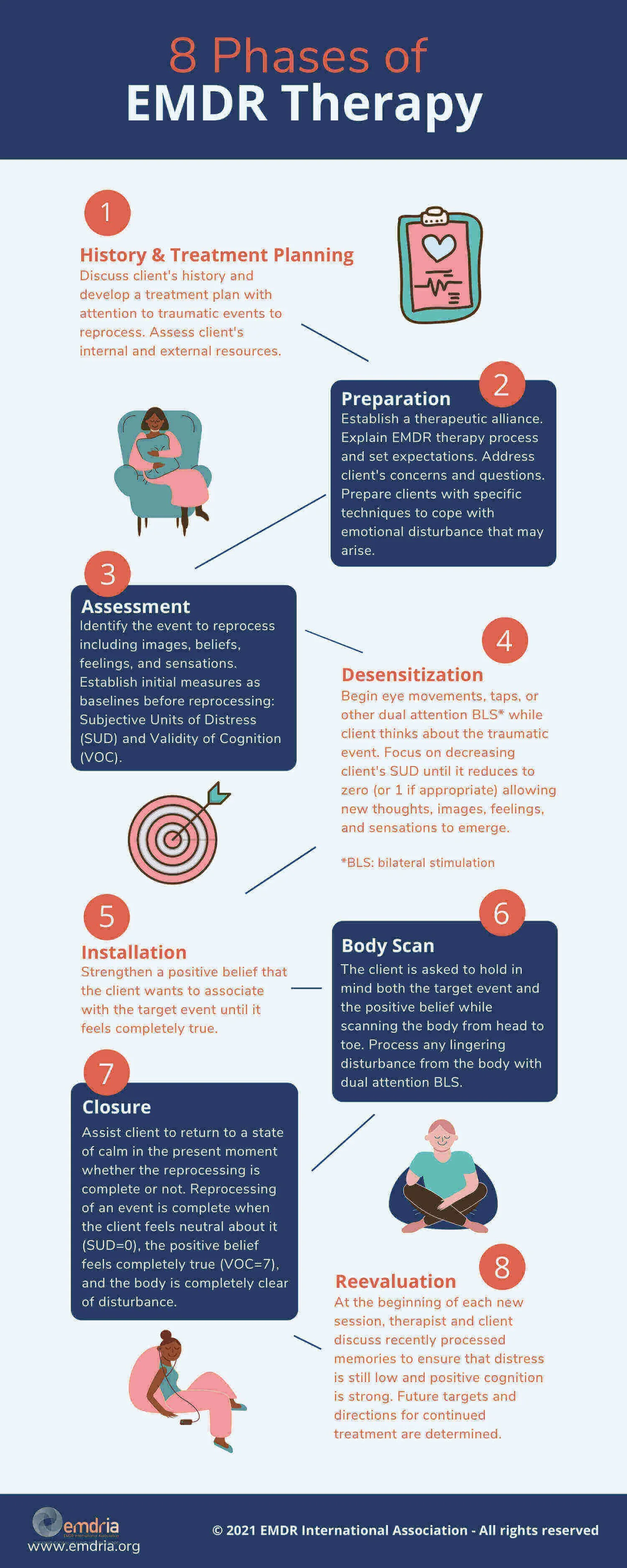
Eye Movement Desensitization and Reprocessing (EMDR) is a structured, evidence-based therapy that helps your brain “reboot” its natural healing process. By focusing briefly on distressing memories while using bilateral stimulation (like guided eye movements, tapping, or alternating sounds), we can reduce the intensity of those memories.
The goal isn’t to forget what happened, but to help your brain file those memories away so they no longer trigger a “fight, flight, or freeze” response in your daily life.
EMDR is one of the most extensively researched psychotherapy methods for trauma. It is recognized as an effective treatment by the World Health Organization (WHO), the American Psychiatric Association (APA), and the U.S. Department of Veterans Affairs. Research shows it is effective for PTSD, as well as anxiety, depression, and many other distressing life experiences.
What Sessions Look Like
Unlike traditional talk therapy, EMDR doesn’t require you to go into full, graphic details about your past. We focus on the emotions and physical sensations currently tied to those memories. We work at your pace, starting with building “resources”, which are calming tools you can use during and between sessions to feel grounded and safe. We do this from the comfort of your home via a secure, HIPAA-compliant telehealth platform.
Frequently Asked Questions
How long does EMDR therapy take? The timeline is different for everyone. For a single distressing event, relief can happen in a few sessions. For complex or systemic trauma, we spend more time in the preparation phase to ensure you feel supported and ready for the processing work.
Can we do EMDR online? Yes. I utilize a specialized website that allow for effective bilateral stimulation (visual and audio) through your screen for residents across Ohio.
Do I have to talk about everything? I was once told during my training that, “the mind moves quicker than the mouth”. No, EMDR doesn’t require you to tell every detail. You will only need to hold the memory in your mind while the bilateral stimulation helps your brain do the processing work without needing to narrate every detail out loud.
Will EMDR work for me if talk therapy hasn’t? Many of my clients find that the structured and in-depth EMDR sessions provided the relief they haven’t found elsewhere, some even after years of therapy.
Learn more about the global standards and research of this method at EMDRIA: What is EMDR Therapy?
References:
Maxfield, L. (2019). A clinician’s guide to the efficacy of EMDR therapy. Journal of EMDR Practice and Research [Editorial], 13(4), 239-246.
Shapiro, F., & Forrest, M. S. (2016). EMDR: The breakthrough therapy for overcoming anxiety, stress, and trauma. Hachette UK
Van der Kolk, B.A., Spinazzola, J., Blaustein, M.E., Hopper, J.W., Hopper, E.K., Korn, D. L., & Simpson, W.B. (2007).A randomized clinical trial of eye movement desensitization and reprocessing (EMDR), fluoxetine, and pill placebo in the treatment of posttraumatic stress disorder: treatment effects and long-term maintenance.Journal of Clinical Psychiatry, 68(1), 37-46.